ARCH
Form / material / repetition
Making / observing / comparing
2022-2024
question
method
year
This study approaches the arch as a relationship between mass and opening.
What is perceived first: the object, its contour, or the space held within it?
The works were developed for an exhibition exploring form. Together, they evoke a childhood landscape; individually, they can be read as fragments — curves, roots and repeated marks.
01 — A form
Reference; G. Bachelard, 2014, The poetics of space

01 / Form in concrete

02 / texture trials

03 / mold making
Thinking
A curve.
An opening.
A place between.
Thinking through matter.
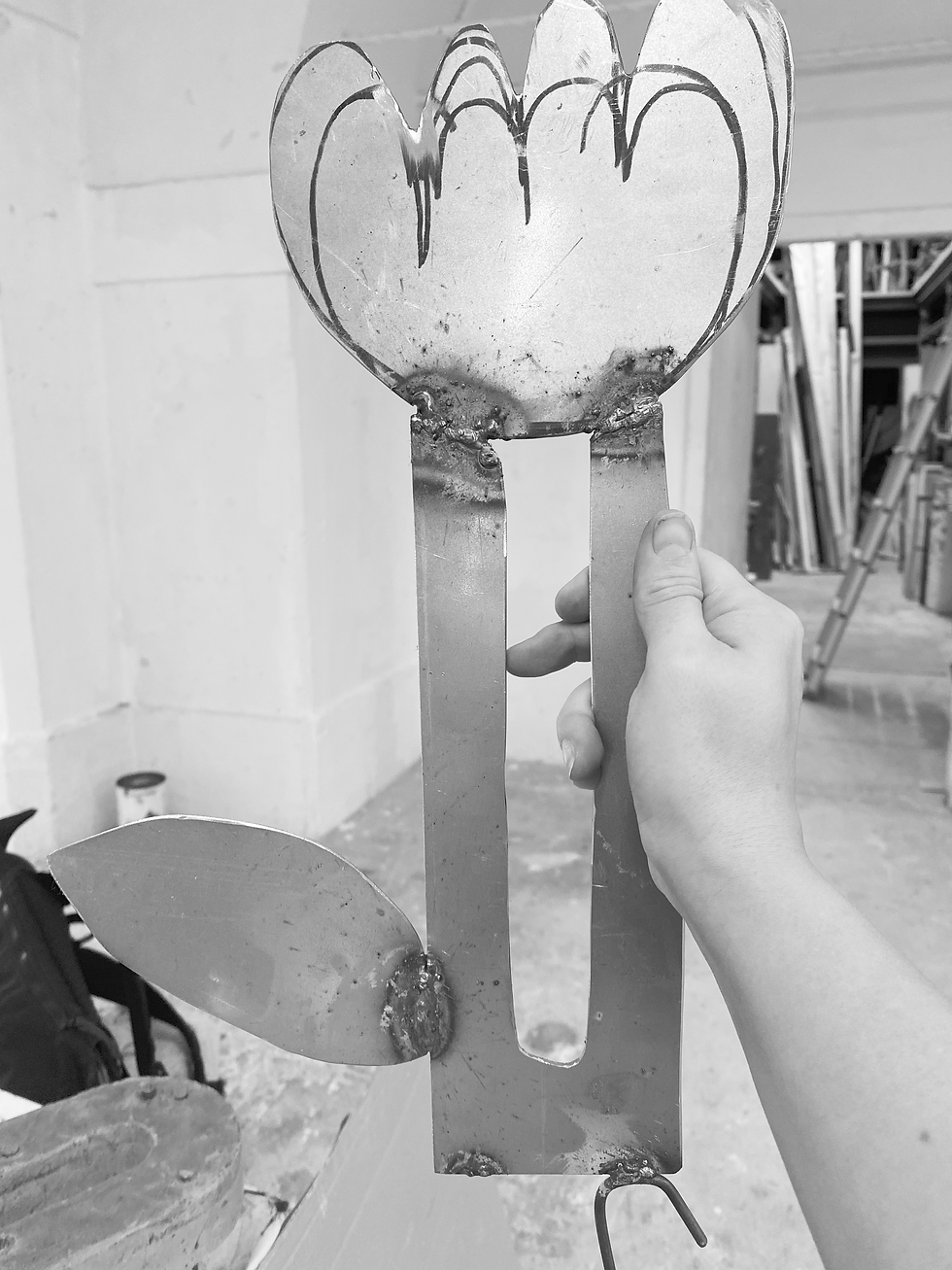
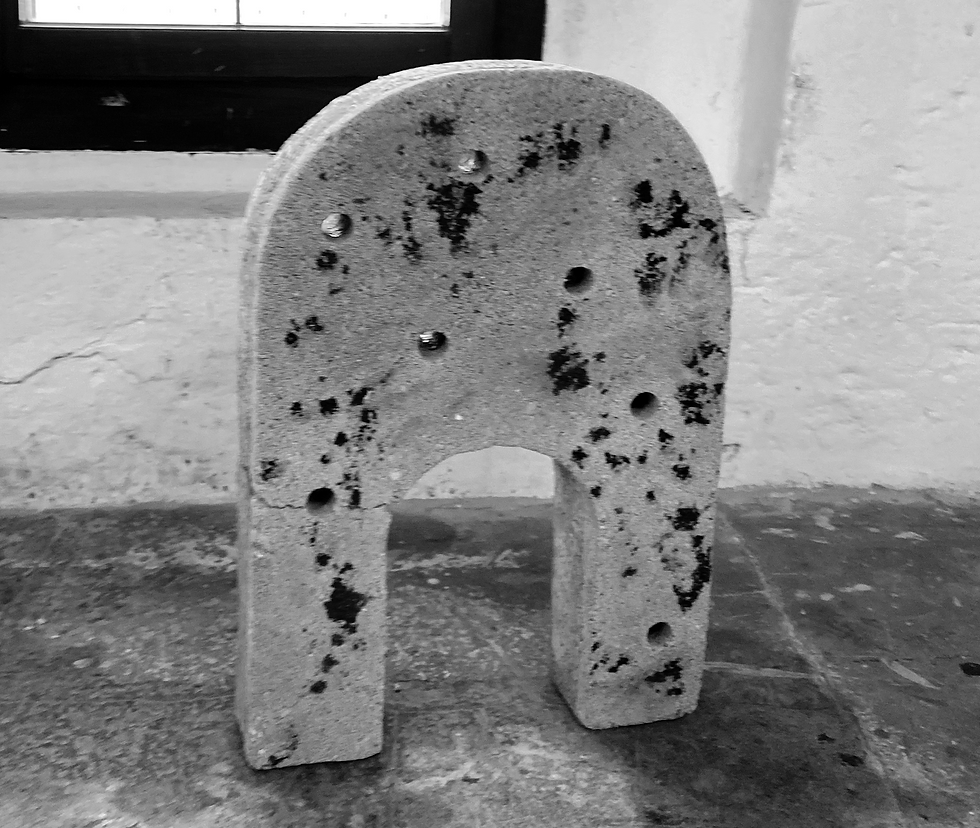
Casting and joining are ways of investigating the curve. The comparison concerns thickness, surface and the relationship between an edge and an opening.
The photographs record traces of making: fixings, surface marks and welded joints. They offer material for observation, rather than a sequence of polished results.
03 — making
Ingold describes form as emerging through an exchange between maker and material. This offers a lens for asking what the process changes, rather than treating making as the execution of a fixed idea.
Reference; T. Ingold, 2013, MakingAnthropology, Archaeology, Art and Architecture

.jpg)
Ingold describes form as emerging through an exchange between maker and material. This offers a lens for asking what the process changes, rather than treating making as the execution of a fixed idea.
Reference; T. Ingold, 2013, MakingAnthropology, Archaeology, Art and Architecture
04 — repetition
One curve.
Many returns.
What changes when the contour is repeated? In the work on linen, curved marks gather into a field. Their spacing and density vary; the lower surface becomes quieter.
Read beside the sculptural arch, the work allows a comparison between an opening held in volume and a curved mark carried by a surface.
A question to carry forward:
When does repetition become landscape?
In dialogue with reading.
Suggested theoretical companions to the study, opening further questions about memory and making.
Reading notes
Gaston BachelardThe Poetics of SpaceTrans. Maria Jolas · Penguin Classics, 2014
Spaces are explored through memory and imagination. A possible point of departure for considering how a childhood landscape is carried into a fragment of form.
Tim IngoldMaking: Anthropology, Archaeology, Art and ArchitectureRoutledge, 2013
Making is a way of learning through engagement with materials. A lens for considering how the curve develops through casting, joining and working by hand.
